
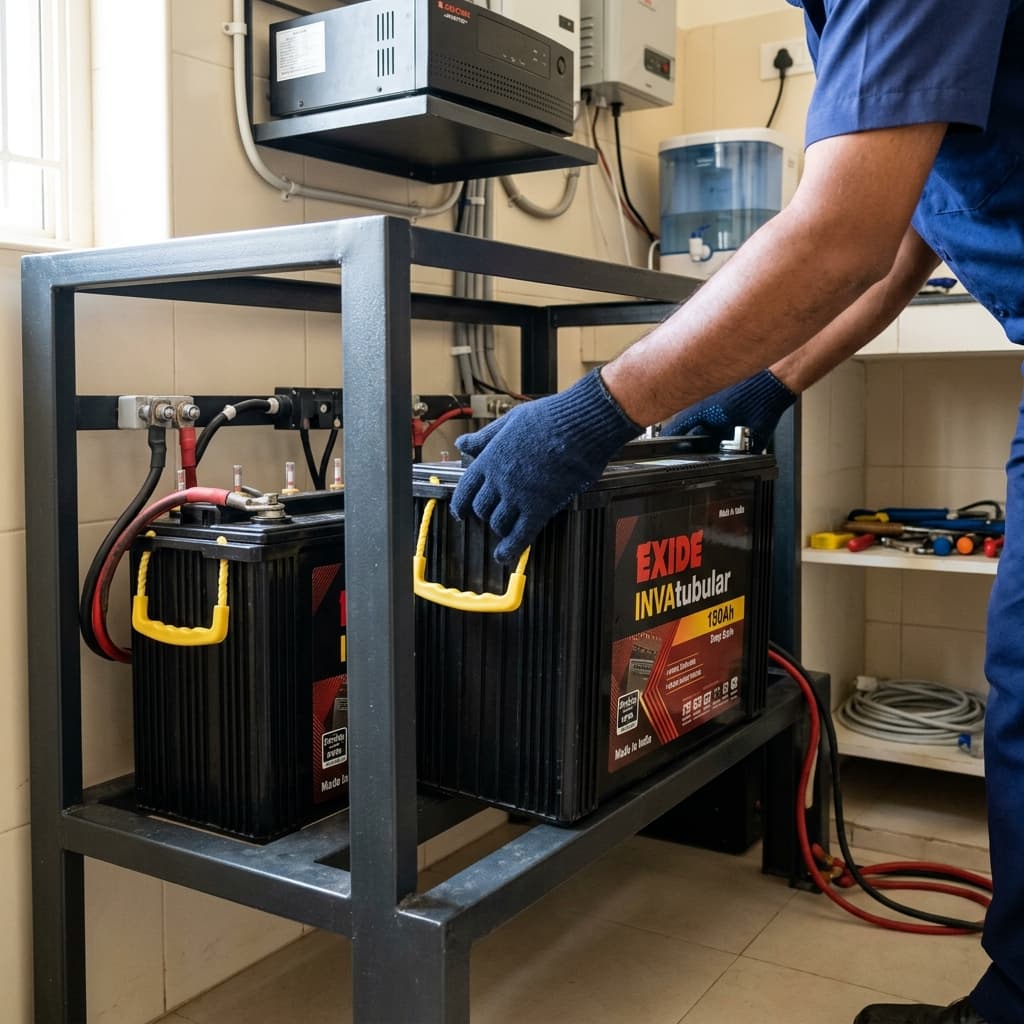
When investing in a residential or commercial inverter battery in Bangalore, homeowners are primarily faced with choosing between two lead-acid battery designs: Tubular Plate Batteries and Flat Plate Batteries. Understanding the electrochemical structure, thermal performance, and discharge resilience of each type helps avoid premature battery failure and repeated repair bills.
Understanding the Structural Architecture
1. Flat Plate Batteries
Flat plate batteries employ traditional pasted flat grid plates. The positive and negative plates are composed of lead-alloy grids pasted with active lead oxide materials.
2. Tubular Batteries
Tubular batteries employ positive plates constructed with multidimensional woven polyester tubes (called gauntlets) that encase high-pressure cast antimony-lead spines surrounded by active paste material.
Performance Comparison Matrix
| Factor | Flat Plate Battery | Tall / Short Tubular Battery |
|---|---|---|
| Typical Lifespan | 2.5 to 3.5 Years | 4.5 to 7+ Years |
| Deep Discharge Recovery | Moderate (Prone to plate sulfation) | Outstanding (Heavy cyclic recovery) |
| Water Topping Frequency | Every 30 to 45 Days | Every 90 to 180 Days |
| Warranty Coverage | 18 to 36 Months | 36 to 60+ Months |
| Initial Cost | 20% to 30% Lower upfront | Higher upfront, lowest cost per year |
| Bangalore Suitability | Low power cut areas (<1 hr) | Frequent load-shedding zones (2-6 hrs) |
Bangalore Electrical Conditions & Local Recommendations
Bangalore residential neighborhoods like Whitefield, HSR Layout, Electronic City, and Bellandur frequently experience unscheduled feeder tripping, low grid voltage during peak evening hours, and extended monsoon outage windows.
Under these conditions, flat plate batteries tend to experience rapid electrolyte boil-off and sulfation due to prolonged absorption charging cycles. Tall tubular batteries, such as the Exide Inva Tubular or Luminous Red Charge series, offer larger acid reserves, cooler operating temperatures, and superior recovery from low-voltage grid supply.
Essential Battery Maintenance Best Practices
To maximize the operating life of your battery pack: