
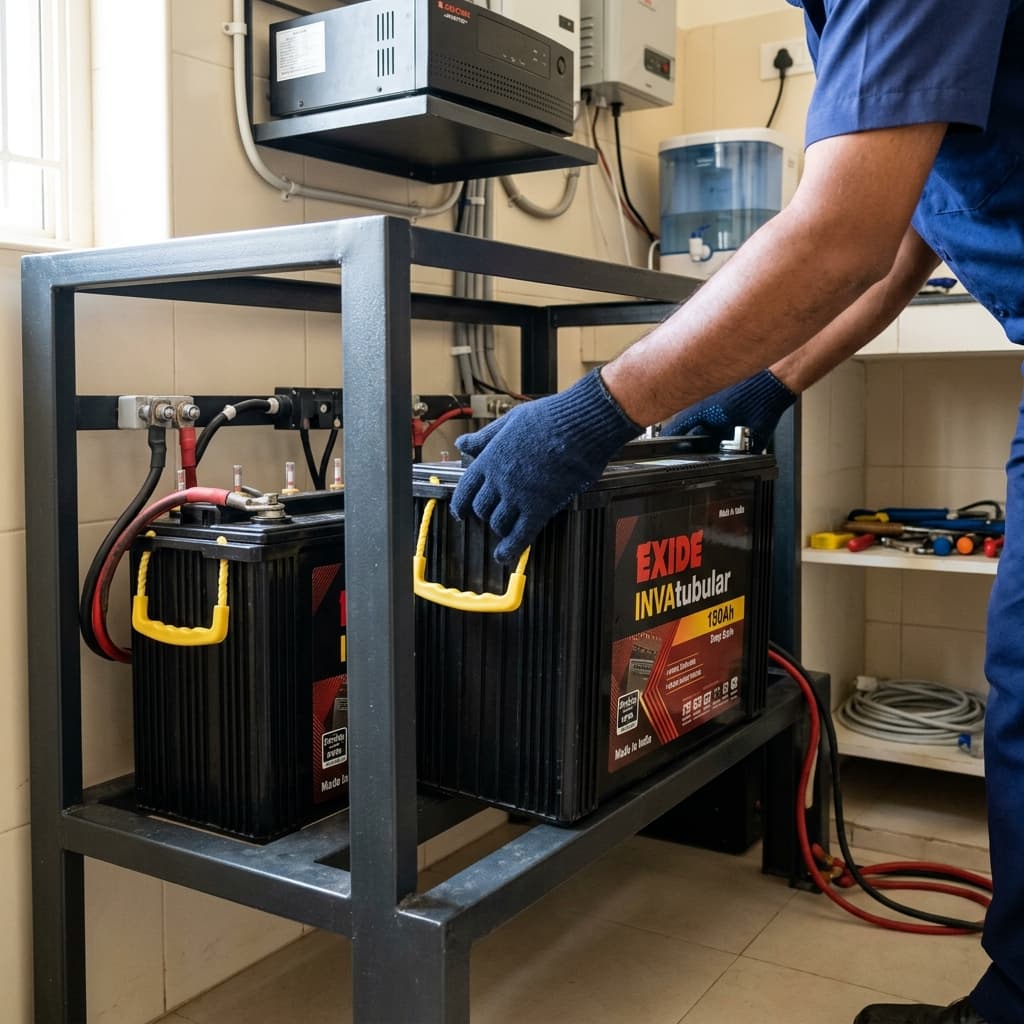
During Indian summer months from March through June, ambient temperatures in Karnataka frequently reach 36°C to 40°C. High ambient heat combined with internal electrochemical heat generated during battery charging accelerates water loss and causes plate sulfation.
Follow this practical summer maintenance checklist to protect your power backup setup from premature failure during peak power cuts.
Summer Maintenance Checklist
1. Inspect Float Indicators Fortnightly
Lead-acid batteries undergo electrolysis during absorption charging, splitting water molecules into hydrogen and oxygen. In high ambient heat, evaporation rates quadruple.
Check the floating water indicators: never allow the indicator float to drop below the designated red danger line.
Always replenish using pure deionized or distilled water. Never add raw acid or tap water, which introduces mineral contamination that ruins lead plates.
2. Neutralize Terminal Lug Corrosion
White or bluish powdery deposits around lead terminal lugs are lead sulfate crystals that introduce high electrical contact resistance. This causes charging faults and false low-battery alerts.
Clean terminals using a warm baking soda and water mixture applied with a wire brush.
Once completely dry, coat the terminals with petroleum jelly or silicone dielectric spray to seal out oxygen and moisture.
3. Verify Room Cross-Ventilation
Inverters and batteries should never be stored in airtight closets, enclosed stairwell cavities, direct sunlight, or near kitchen heat sources.
Ensure adequate cross-breeze clearance to evacuate hydrogen gas safely and dissipate charging heat.
4. Check Inverter Cut-off Voltages
If your inverter continues rapid high-current charging when the battery is already fully warm, electrolyte boiling will occur, leading to battery casing bulge.
Verify that the smart charger switches into trickle/float mode once 90% state of charge is achieved.
5. Schedule Professional Health Diagnostics
Schedule a professional technician checkup annually to perform hydrometer specific-gravity testing and load discharge tests to detect weak cells before total power failure occurs.