
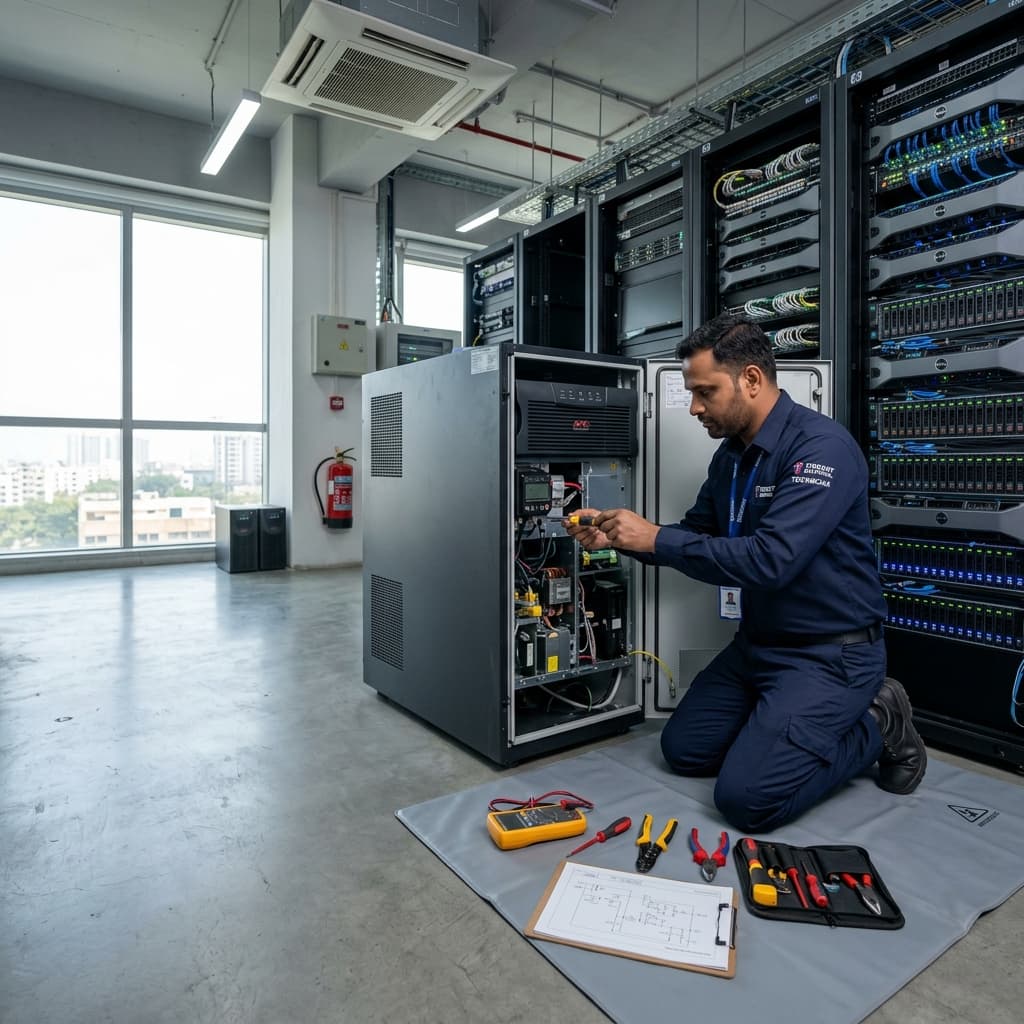
Lithium Iron Phosphate (LiFePO4) technology has emerged as the premier choice for modern energy storage. While lead-acid tubular batteries have served as the dependable backbone of Indian homes for decades, lithium-ion battery systems are setting new benchmarks for efficiency, footprint, and operational lifespan.
Head-to-Head Specification Comparison
| Parameter | Tubular Lead-Acid Battery | Lithium Iron Phosphate (LiFePO4) |
|---|---|---|
| Usable Depth of Discharge (DoD) | 50% to 70% | 90% to 95% |
| Cycle Life (80% Capacity Retention) | 1,200 to 1,500 Cycles (~4-6 Years) | 3,500 to 5,000+ Cycles (~10-15 Years) |
| Full Charging Duration | 8 to 10 Hours | 1.5 to 3 Hours (Fast Charging) |
| Weight (for 150Ah / 1.8kWh) | 55 kg - 65 kg (Heavy Lead) | 15 kg - 20 kg (Compact & Wall-Mountable) |
| Routine Water Maintenance | Distilled water top-up required | Zero maintenance (Hermetically sealed) |
| Round-Trip Efficiency | 75% to 80% (Energy lost as heat) | 95% to 98% (Minimal internal resistance) |
| Upfront Capital Cost | Affordable initial investment | 1.8x to 2.2x upfront premium |
Why Lithium Is Gaining Ground in Modern Apartments
1. Ultra-Rapid Charging During Intermittent Power
During emergency grid distress where power is available only for brief 1-to-2 hour windows, lead-acid batteries cannot recover sufficient charge. LiFePO4 cells accept high current charging safely, reaching 80% capacity within 90 minutes.
2. Wall-Mountable Aesthetics & Zero Fumes
Lead-acid batteries emit trace hydrogen gases during absorption charging, demanding open balcony or utility area ventilation. LiFePO4 battery packs utilize hermetically sealed prismatic cells with zero hazardous acid fumes, enabling clean installation inside modern living rooms or under work desks.
3. Integrated Battery Management System (BMS)
Every quality lithium battery integrates a micro-processor controlled BMS that continuously monitors individual cell voltages, temperature, and short-circuit protection, preventing overcharging and cell degradation.
Total Cost of Ownership (10-Year Timeline)
While a tubular battery costs roughly half as much initially, it requires replacement every 4 to 5 years, in addition to regular distilled water maintenance. Over a 10-to-12 year operating window: